
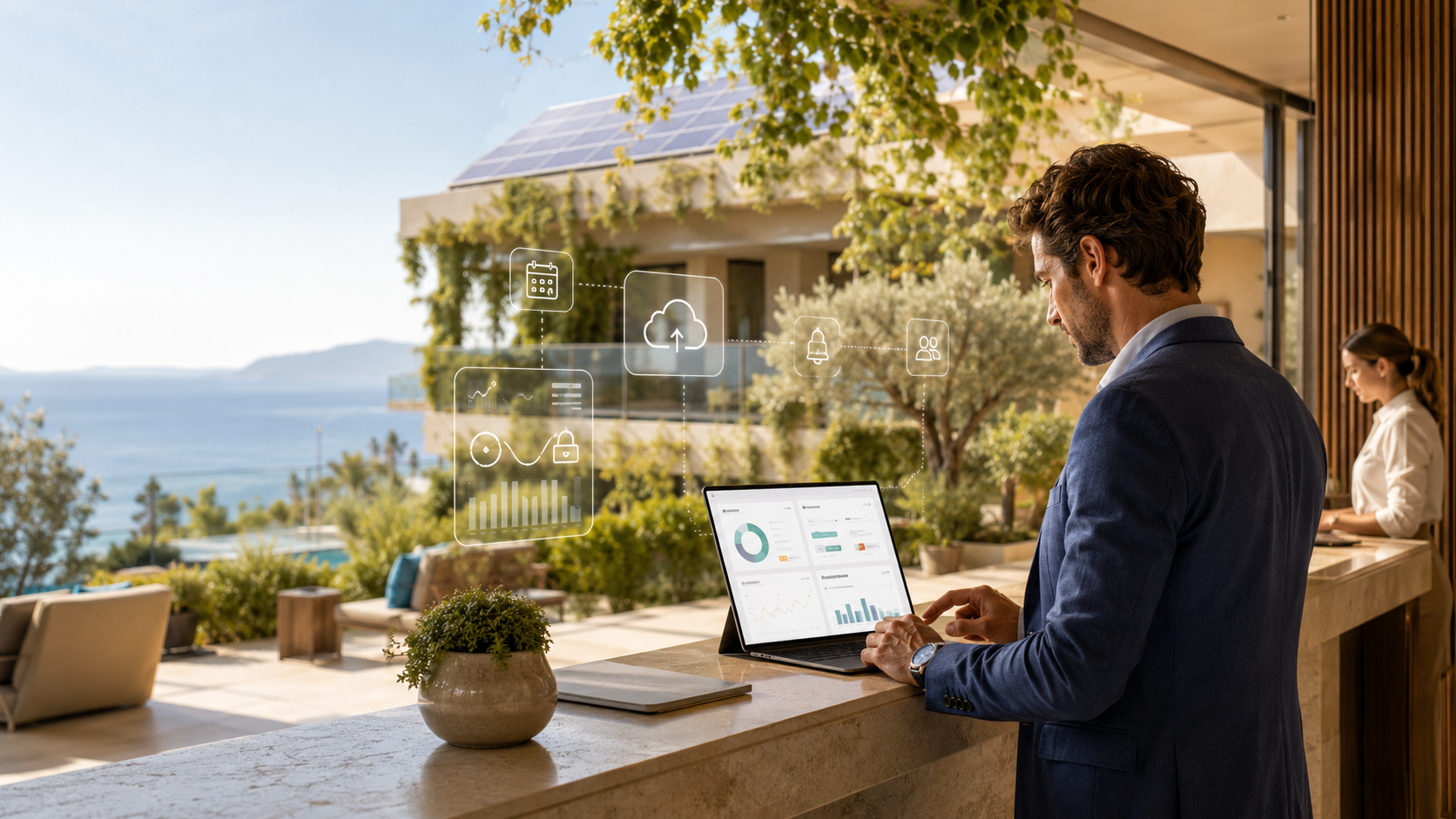
The GreenTour 2026 funding programme provides €109 million to support the sustainable and digital transformation of Italian tourism businesses.
Hotels, resorts, campsites, beach clubs, restaurants and other tourism businesses can include not only energy-efficiency measures in their investment plans, but also software solutions, automation systems and new technologies designed to improve both property management and the guest experience.
Applications can be submitted through Invitalia from 15 July to 15 September 2026. Eligible programmes must have a total investment value of between €1 million and €15 million.
Businesses currently preparing their projects should therefore identify which digital initiatives to include in their plans and prepare a technical description aligned with the programme’s objectives.
What is GreenTour 2026?
GreenTour is an incentive promoted by the Italian Ministry of Tourism and managed by Invitalia. Its purpose is to support the sustainable development and digitalisation of tourism businesses.
The measure provides a predefined combination of:
- 54% non-repayable grant;
- 46% subsidised financing.
These percentages describe the composition of the financial support awarded, subject to the maximum aid intensities applicable to each business and category of expenditure. They do not necessarily mean that every investment will be fully covered.
Eligible programmes must have a value of between €1 million and €15 million and must primarily focus on improving energy efficiency or generating energy from renewable sources.
Energy-related measures classified as “primary investments” must account for at least 51% of eligible expenditure. The remaining portion may include additional, ancillary and digitalisation investments, provided they are consistent with and functional to the overall project.
How much of the project can be allocated to digitalisation?
Digitalisation is explicitly covered by the programme, but it must form part of an investment plan in which energy-related measures remain predominant.
Since at least 51% of the investment must be allocated to primary energy measures, digital initiatives and other ancillary investments may collectively account for the remaining portion of the programme.
There is also a particularly important factor in the ranking process: the proportion allocated to digital initiatives directly contributes to the project’s score.
More specifically:
- no points are awarded when digital investments account for less than 5%;
- 7.5 points are awarded for a proportion between 5% and 9.9%;
- 10 points are awarded for a proportion between 10% and 14.9%;
- allocating at least 15% of the investment to digitalisation awards 12.5 points, the maximum available for this criterion.
For example, in a €1 million programme, a 15% digital component would correspond to an investment of €150,000. Its actual eligibility would naturally depend on the nature of the proposed solutions, the classification of the expenditure and its consistency with the overall project.
Which digital investments are eligible?
The Directorial Decree includes the following among eligible ancillary digitalisation investments:
- the purchase or development of software;
- patents, licences and know-how;
- non-patented technical knowledge concerning new technologies;
- systems designed to digitalise the tourism ecosystem and tourism supply chains;
- technologies that help reduce the seasonal concentration of tourist flows;
- automated building-management systems;
- artificial intelligence solutions;
- equipment and systems for automation and energy-consumption optimisation;
- structured cabling and internal data-network infrastructure.
However, simply purchasing generic software or redesigning a website is not enough. The proposed solution must perform a clearly defined function within the investment programme and make a tangible contribution to its stated objectives.
Examples of digital projects for hotels and tourism businesses
Each project should be designed around the specific characteristics of the property or business. Potential solutions may include the following.
Custom software platforms
Management software developed around the business’s requirements can centralise bookings, availability, additional services, maintenance activities, guest communications and administrative processes.
It can also connect existing systems, reducing manual data entry and preventing data duplication.
Process automation
Digital check-in, automatic room allocation, guest-request management, staff notifications and the coordination of housekeeping activities can reduce operating times and errors.
Automation is particularly valuable for businesses with multiple locations, numerous accommodation units or complex service offerings.